
Minnesota Parole and Probation
Parole and probation both place a person under rules in the community, but they arise from different legal paths. Minnesota also uses the term supervised release for the community portion of many fixed state prison terms. Ordinary qualifying felony sentences for crimes committed on or after August 1, 1993 generally follow a statutory prison and supervised-release structure. They do not require the Supervised Release Board to vote on each exit. Parole remains the right term for the narrow sentence classes assigned to that Board.
Probation is a court-ordered sentence or part of a sentence. It may follow time in a county jail, or the court may order it without commitment to the Commissioner of Corrections. The court record identifies the case and order. The probation or community-corrections agency maintains its supervision data. Minnesota parole and probation checks must therefore start with the sentence source, not with a broad assumption that all community supervision is the same.
| Point | Parole or supervised release | Probation |
|---|---|---|
| How it starts | Follows a state prison sentence or a Board decision within its defined caseload | Begins under a district court order |
| First public source | MNDOC public viewer for a person still under DOC jurisdiction | MCRO case disposition and public orders |
| Who verifies it | MNDOC Field Services or the agency named in the result | The listed county probation or Community Corrections Act department |
| End record | MNDOC expiration or final-discharge record | Court discharge order and the agency's public end-date data |
- Supervised release
- The community part of a state sentence after the prison portion ends.
- Parole
- Discretionary release used for the sentence classes assigned to Minnesota's Supervised Release Board.
- Probation
- Court-ordered supervision that may exist without a state prison admission.
- Discharge
- The legal end of the applicable sentence or supervision jurisdiction.
The Minnesota Department of Corrections agency page shows the statewide corrections source used for state cases.

MNDOC is one part of the statewide supervision structure, not the sole probation office for all Minnesota cases.
Verify Minnesota Post-Release Supervision
A released state prisoner who remains within MNDOC jurisdiction may appear in the public viewer as “Under Supervision as of” a stated date. An intensive-supervision result can use similar wording. The entry can name the supervising office and agent. Read the whole status line. An official result can also say that a person under supervision is in custody at a non-DOC facility, so supervision status alone does not establish present physical freedom.
For probation, use Minnesota Court Records Online to locate the public disposition and orders. Then contact the agency named in that order. Minnesota law makes a defined set of adult court-services data public, including the fact and location of parole, probation, or diversion; the offense; supervision start and end dates; duration; public revocation information; conditions; and the supervising agency or individual. Other court-services data remain private.
- Determine whether the case followed state prison, a county sentence, or a court-only probation order.
- For a state sentence, search the MNDOC public viewer by name or MNDOC number and open the matching record.
- Read the full current status, agent or district, and Expiration Date. Do not treat the status effective date as a separately labeled prison release date.
- For probation, find the case disposition and public order through MCRO, then identify the listed probation or community-corrections agency.
- Ask that maintaining agency to verify the public supervision fields it holds. Use the court for an official court copy.
The official MNDOC community-status example displays the “Under Supervision as of” format.
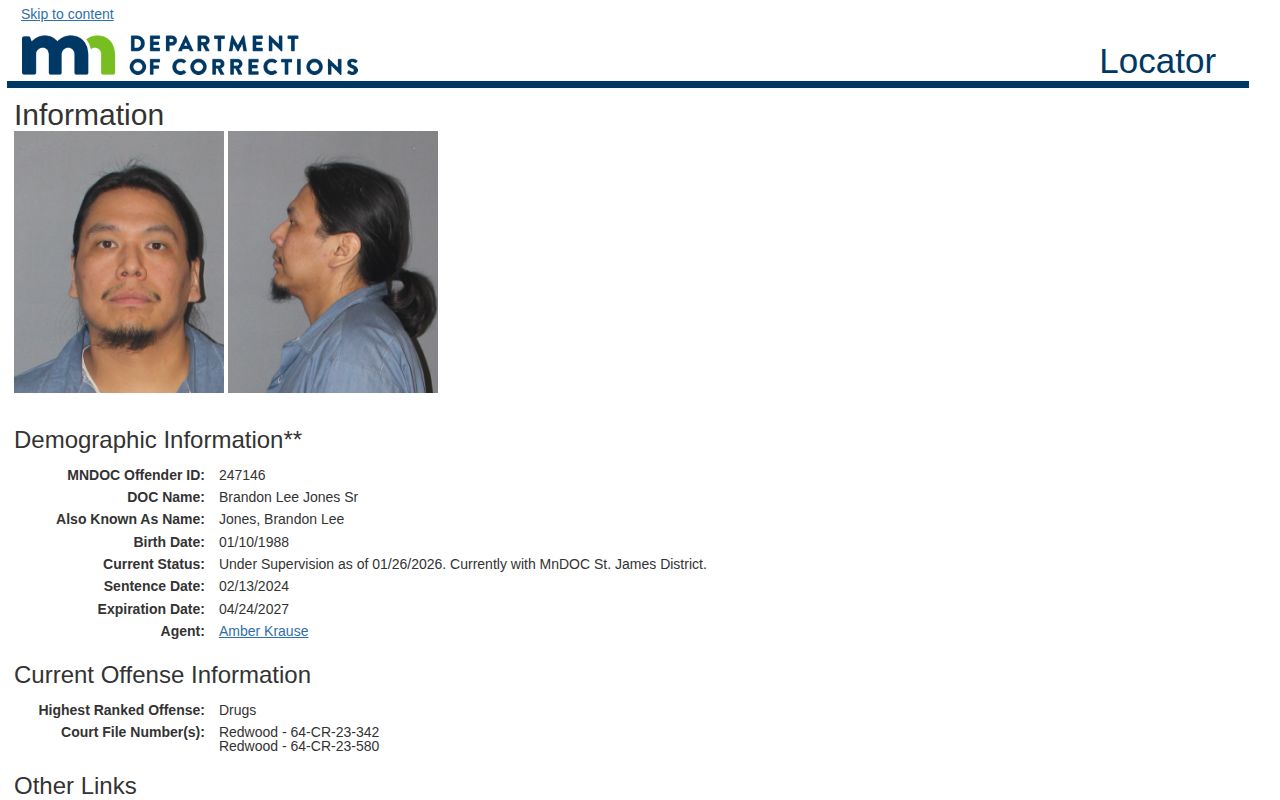
The screen demonstrates why the status date, agent information, and sentence expiration field must be read as separate facts.
Note: A roster disappearance, a supervision label, and a court order are different evidence and should not be merged into one release claim.
Minnesota Supervision Delivery Systems
Minnesota does not assign all community supervision to one statewide field office. The MNDOC Community Supervision program describes three delivery systems: MNDOC Field Services, county Community Corrections Act departments, and county probation offices. The public viewer, court order, or local agency directory points to the correct one for a named person. This split is crucial in a statewide search because the county of conviction does not always tell the full agency story by itself.
MNDOC Field Services is the state layer. County Community Corrections Act departments operate another layer, while county probation offices form the third. A person may be under supervised release after prison, probation after a local sentence, or a distinct form of court supervision. The maintaining office should answer only for the record it holds. Minnesota parole and probation verification is more reliable when the request includes the person's full name, case or MNDOC number if known, and the exact public field being sought.
The custody route also affects which date has meaning. A state viewer status date tells when the displayed supervision state became effective. A court order can state when probation began and how long it runs. Neither is automatically the timestamp of a county-jail exit. If the person moved from a jail to MNDOC, that event was a transfer into continued custody. Minnesota law treats release and transfer as separate public fields, including the receiving agency for a transfer.
When an online result is unclear, direct a narrow data question to the agency named in the record. Ask whether it maintains the public start date, end date, duration, location, agent, or legal basis for a change. That wording seeks existing data. It does not ask staff to interpret the entire case. A certified court order comes from court administration, while the supervising office verifies its own public operational record.
Agency check: Use the office named in the current MNDOC result or court order, since Minnesota has no single universal county supervision office.
The MCRO live case search supplies the court-side route for a probation order.
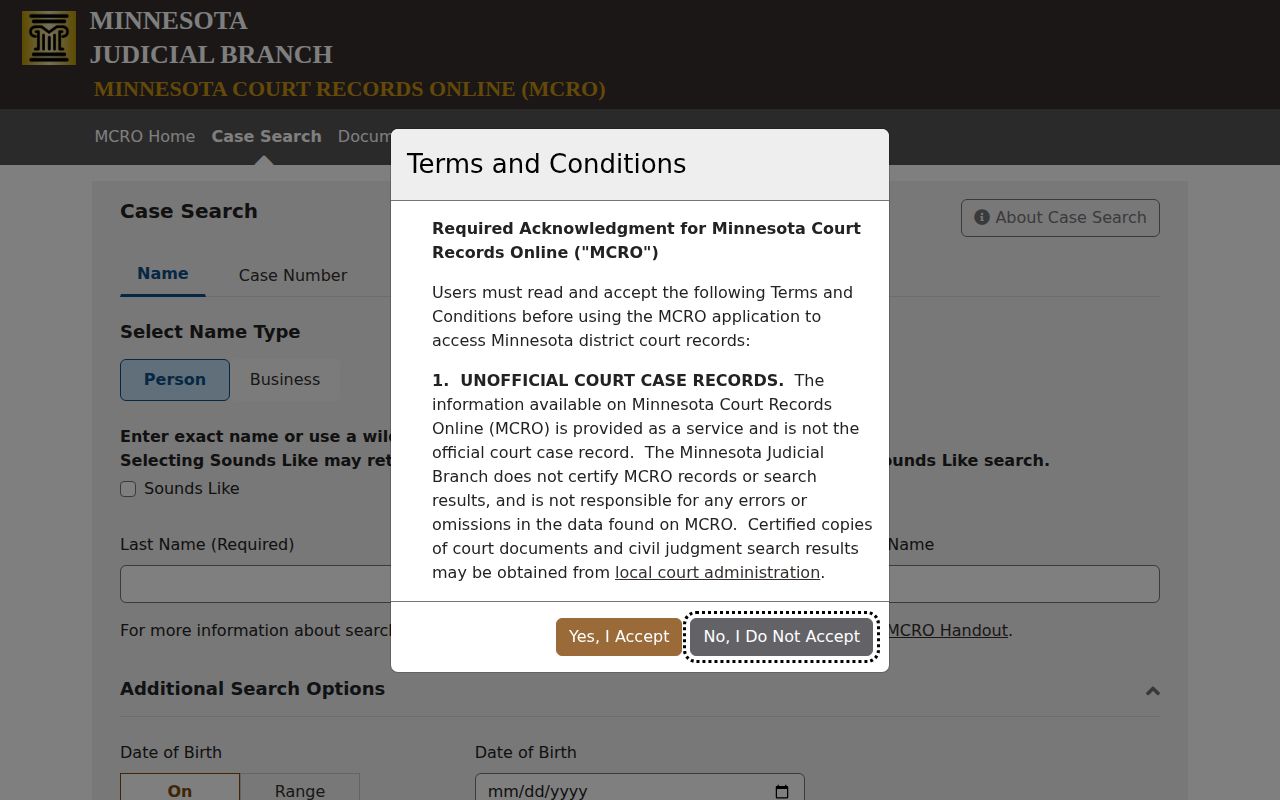
MCRO can establish the public case history, while the supervising agency remains the source for its maintained supervision data.
Minnesota Fugitive and Warrant Checks
An absconder is a person alleged to have stopped reporting or left supervision without authorization. The MNDOC Fugitive Search is the statewide public route for people wanted by MNDOC. It is not a complete Minnesota warrant index. A no-result there does not clear every court or local warrant, and it does not confirm that supervision has ended.
Court warrant-index data are generally confidential until custody, service, or appearance unless the agency finds that release serves the public purpose. For a court warrant, consult the public court record and the issuing or holding agency. A supervision violation also does not have one automatic outcome. The responsible authority may respond under the sentence, conditions, and applicable process. Public records can show a revocation order and reason where section 13.84 makes those adult court-services fields public.
The official MNDOC fugitive interface illustrates the narrow DOC absconder search.
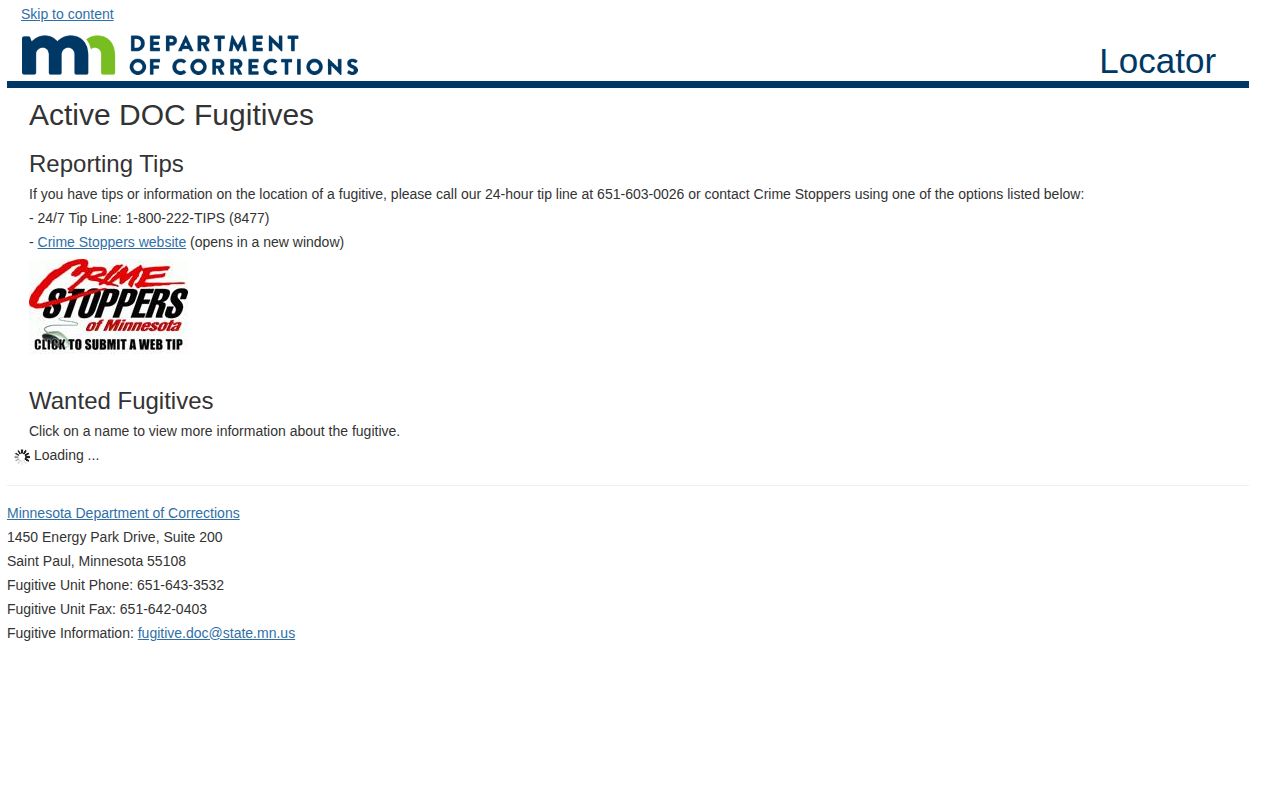
Its limited scope is a reason to separate an MNDOC fugitive check from a court or local warrant inquiry.
Minnesota Supervision End Dates
Conditions are the rules attached to parole, supervised release, or probation. They vary with the sentence and order. Public adult court-services data can include conditions, duration, the supervising agency, and certain changes in supervision. The public field list does not make every case note or private court-services record open. Ask for named, existing public data instead of asking an office to give a broad account of someone's conduct.
Minnesota Rehabilitation and Reinvestment Act provisions add a second timing issue. Section 244.41 defines earned compliance credit as one month of active-supervision reduction for each two compliant months under the policy, while section 244.46 governs mechanics and exclusions. Supervision abatement may end active reporting. It does not change the legal Expiration Date, so it must not be called early final discharge.
The official MNDOC date-field example shows how an Expiration Date is presented with other sentence information.
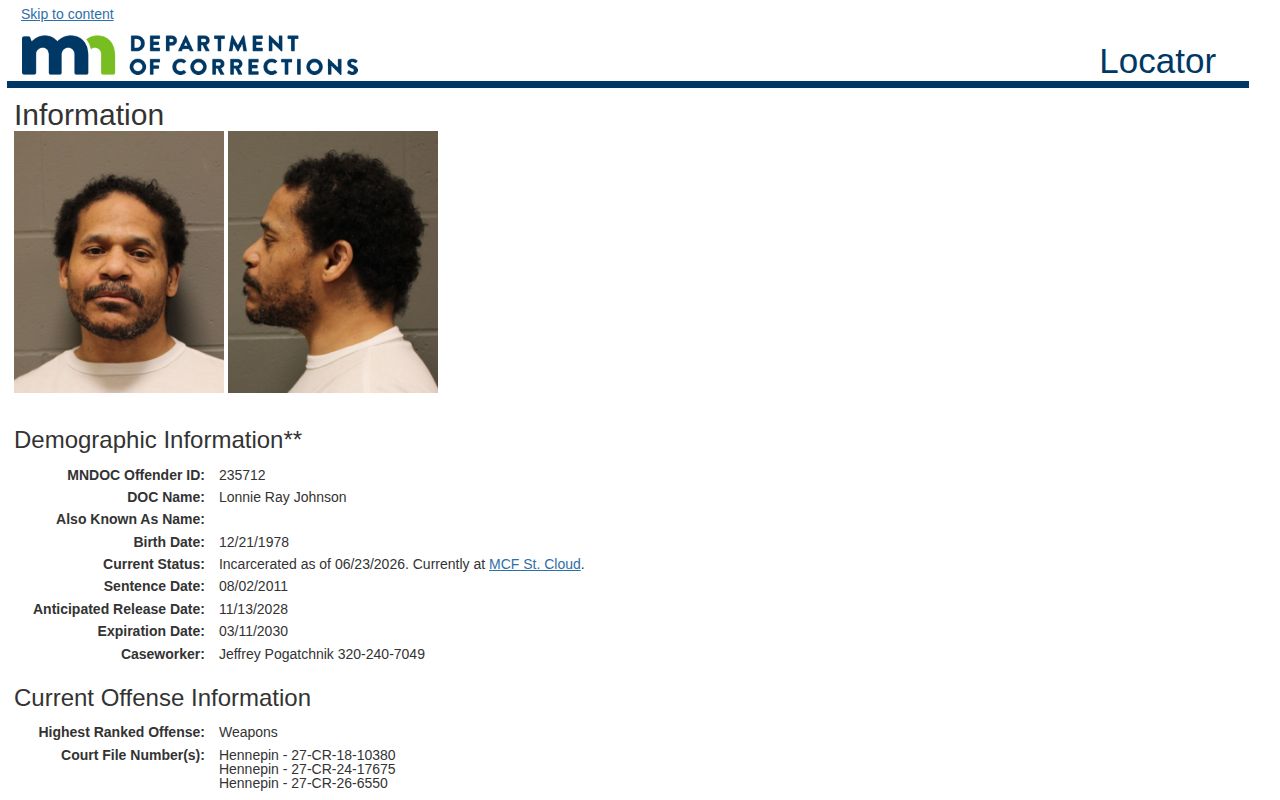
The displayed Expiration Date concerns the projected end of jurisdiction, not the day the person physically left prison.
Note: Active reporting can stop before legal jurisdiction expires, so the agency record and its field labels control the answer.
Minnesota Final Discharge Records
Minnesota's live locator is bound to current jurisdiction. It covers adults committed to the Commissioner who are incarcerated or remain under supervision. Once DOC jurisdiction finally expires, a person can fall outside that active scope. A missing result should be reported as not found in the current viewer. It does not prove that the person was never incarcerated, was never released, or never completed supervision.
An Expiration Date is the projected end of the sentence or DOC jurisdiction. It is not a prison-exit date. The Supervised Release Board has final-discharge authority only for its statutory caseload. Other sentences end under their controlling law or court order. For a durable state record, request the maintained final-discharge or expiration data through MNDOC Data Practices. For probation, seek the court's discharge order and the supervising agency's public end-date data.
A focused request names the person and MNDOC or case number if known, identifies the approximate sentence period, and asks for the maintained release, supervision-end, expiration, or final-discharge data. Minnesota's Chapter 13 process permits free inspection of public data. Lawful copy costs may apply, and protected corrections or court-services data can be withheld under the governing classification. The broader statewide release path is set out on the Minnesota released inmates home page.
Chapter 13 also requires a denial to identify the specific legal authority for withholding data. Corrections information may be protected when disclosure would endanger a life, an authorized investigation, an informant, or institutional security. That boundary does not erase the public adult supervision fields listed in section 13.84. It means a requester should separate the public dates and agency facts from private case notes or protected operational details.
A final check should reconcile the sources by date. The latest MNDOC status answers what the viewer reported while DOC jurisdiction continued. The court order establishes the judicial action. The supervising agency can verify its maintained public start or end data. A final-discharge or expiration record supplies the durable end point when the live locator no longer carries the person.
The strongest record chain states what each document proves. A county release record can prove when local jail custody ended or moved. An MNDOC community result can establish that DOC supervision was active as of its stated date. A probation order can establish the judicial term, and the agency's public data can identify its start, end, location, and duration. None should be made to answer for another system.
This separation also helps when dates seem to conflict. A prison departure may occur before the legal Expiration Date. Active reporting may be reduced through earned compliance credit before jurisdiction ends. A court may later discharge probation under its order. Compare the labels and the agency dates first. If they still conflict, request the maintained records rather than choosing the earliest or latest date by guess.
For a released person no longer found online, preserve the search date and exact no-result wording. Then move to the records route. A current locator can change as jurisdiction ends, but the maintained expiration, discharge, and court records remain the proper sources for a past supervision conclusion.