
Minnesota Parole Board Jurisdiction
Minnesota's current decision-making body is the five-member Supervised Release Board, commonly shortened to SRB. Minnesota Statutes section 244.049 transferred specified discretionary-release and final-discharge authority to the Board beginning July 1, 2024. Its caseload includes life sentences with the possibility of parole or supervised release, indeterminate sentences for offenses committed on or before April 30, 1980, and eligible early-supervised-release cases identified by the statute.
That scope prevents two common mistakes. Minnesota does have a parole board now. Yet the SRB does not decide every state prison release. For most modern determinate sentences, state law sets a prison portion and a supervised-release portion. Calling every such transition a parole grant would overstate the Board's role and lead a searcher to the wrong calendar.
The history explains why older sources can be confusing. From the early 1970s through June 2024, the Commissioner held sole life-parole decision authority with an advisory process. The SRB became the statutory decision body on July 1, 2024. A record search should use the authority and procedure that applied on the decision date, while current hearings belong to the Board's official hub.
The Minnesota Department of Corrections home page provides the agency context for the current Board.
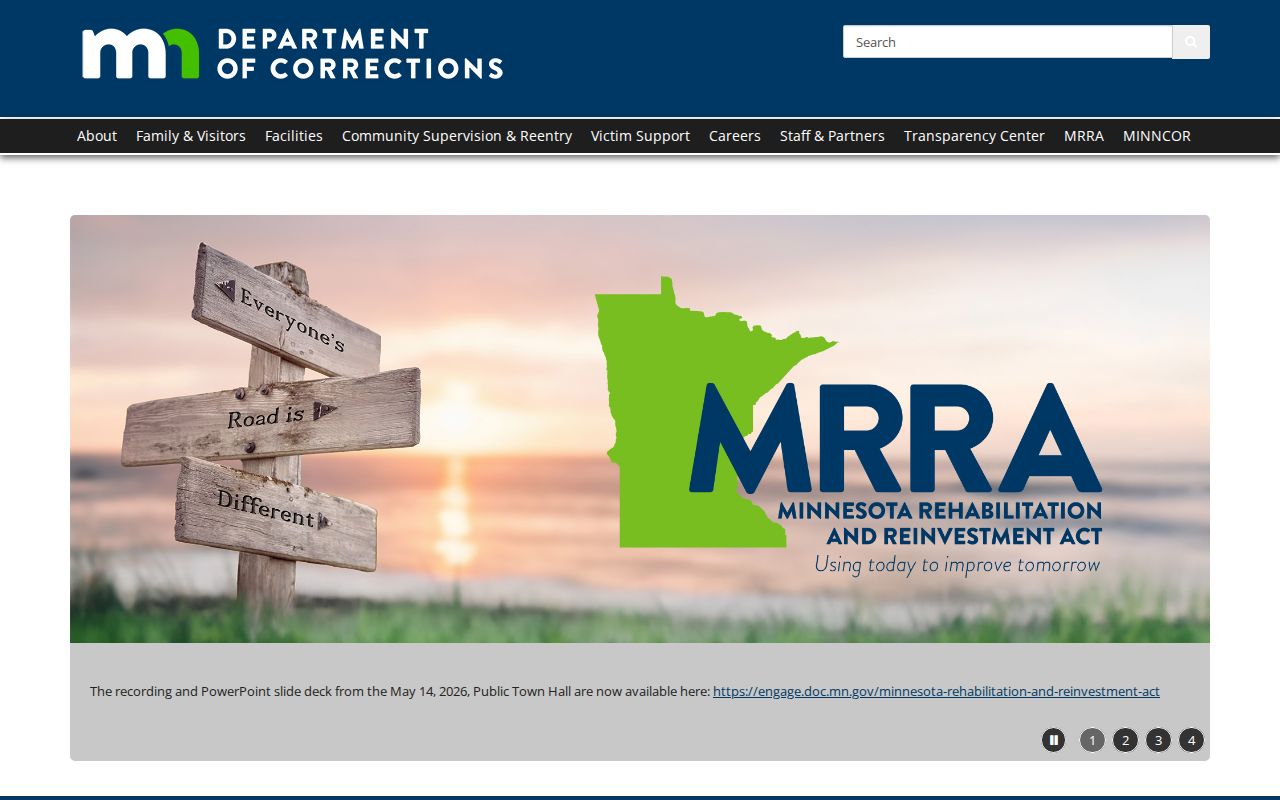
The MNDOC setting matters because the Board is a defined corrections decision body, not a general court or county release office.
- Determinate sentence
- A fixed sentence governed by statutory prison and supervised-release rules.
- Indeterminate sentence
- An older sentence form whose release depends on the governing minimum and decision process.
- Readiness review
- A Board assessment before minimum or projected eligibility.
- Final discharge
- The end of sentence jurisdiction within the Board's assigned caseload.
Find Minnesota Parole Hearing Dates
The official Board Review Hearings hub is the current schedule and results route. MNDOC labels the review schedule “updated regularly” and advises visitors to check back often. The hub posts the next public-meeting notice, agenda, date and time, physical location, livestream route, and the current review-schedule PDF. The Hearings and Release Unit maintains schedules and assembles review material with the committing county and facility caseworker.
A calendar entry proves that a matter was planned for review. It does not prove the hearing went forward, predict the outcome, or establish release. Names and dates can change as the schedule is updated. Save the date checked and the meeting date. Then return after the meeting for approved minutes or other posted results.
The schedule also serves a narrower purpose than the offender viewer. It organizes Board review activity for covered cases. It is not a list of all Minnesota prisoners with upcoming release dates. If a fixed-sentence prisoner is not listed, first check whether the sentence follows ordinary statutory supervised release. The absence may be correct rather than an omission.
- Open the Board Review Hearings hub and note the page's current update date or meeting notice.
- Open the latest review-schedule PDF and look for the person's name and review date.
- Compare the scheduled matter with the meeting agenda, since the agenda identifies what the Board expects to take up.
- Record the meeting date and check the hub again for the recording and approved minutes.
- If the person is absent, confirm that the sentence is within SRB jurisdiction before assuming a schedule is missing.
The MNDOC public viewer is the later status source used after a scheduled Board review.
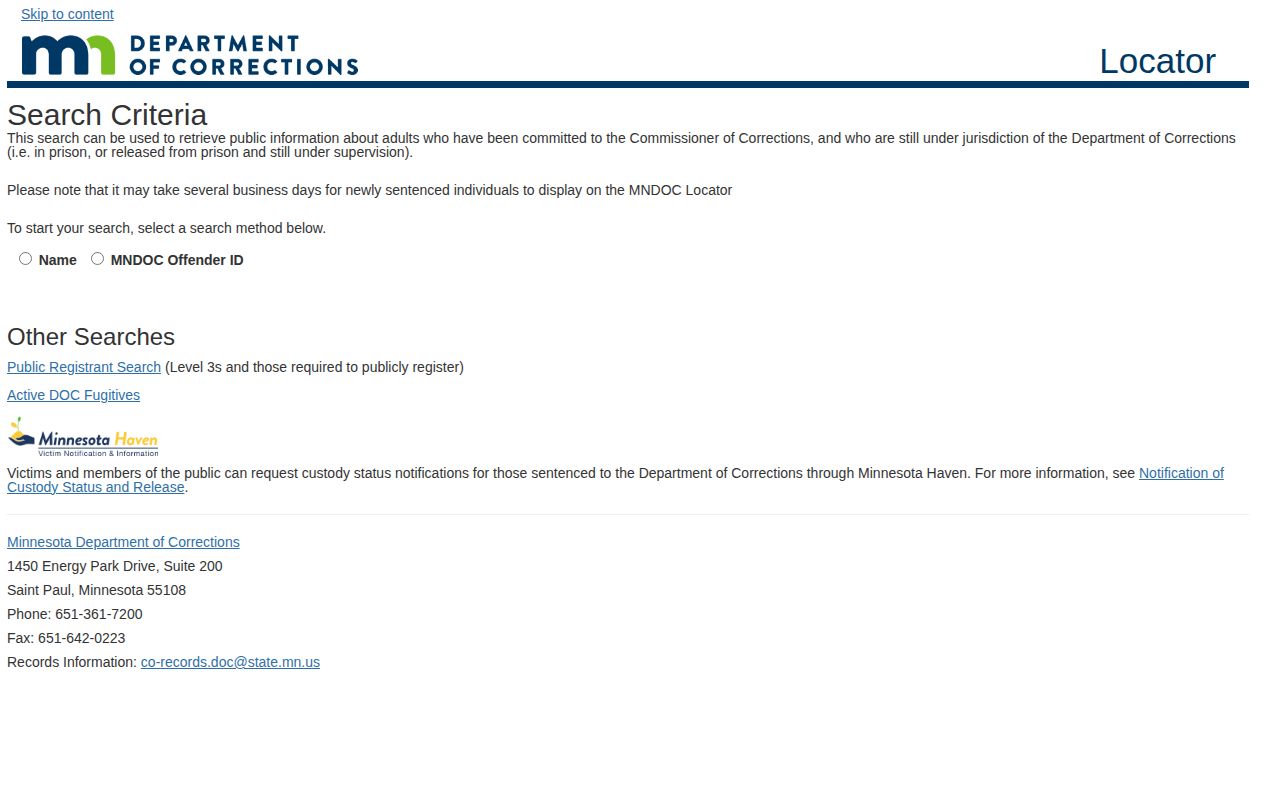
The public viewer shown here is a later status check, while the Board hub remains the source for the meeting schedule itself.
Note: An agenda documents a planned review; approved minutes are the stronger web record of what the Board actually decided.
Minnesota Eligibility and Readiness Review
Eligibility is sentence-specific. Section 244.05, subdivisions 4, 4a, 4b, and 5 supplies eligibility and procedure for Board cases. Applicable minimums vary by sentence and offense configuration. Special provisions also apply to people who committed offenses before age 18. Those rules should be read for the individual sentence rather than compressed into one statewide waiting period.
The SRB overview describes an initial readiness review approximately three years before minimum or projected eligibility. At that stage, the Board assesses readiness under statutory criteria. It may continue a matter with directives or set a projected release date, but it cannot authorize departure before statutory eligibility. A denial may return under the governing review cycle. A prerelease grant may later be rescinded for violation of a condition.
A readiness review can therefore produce work that must occur before a later decision. Directives may be reflected in the Board record and a continuation can reserve the final question. The projected date, if one is set, remains subject to the governing sentence and stated conditions. Actual movement is verified later through custody records, not inferred from the readiness stage.
Five separate markers: Eligibility, readiness review, projected release date, grant, and physical release should never be reported as interchangeable events.
The official MNDOC anticipated-date example demonstrates the later status fields that require careful reading.
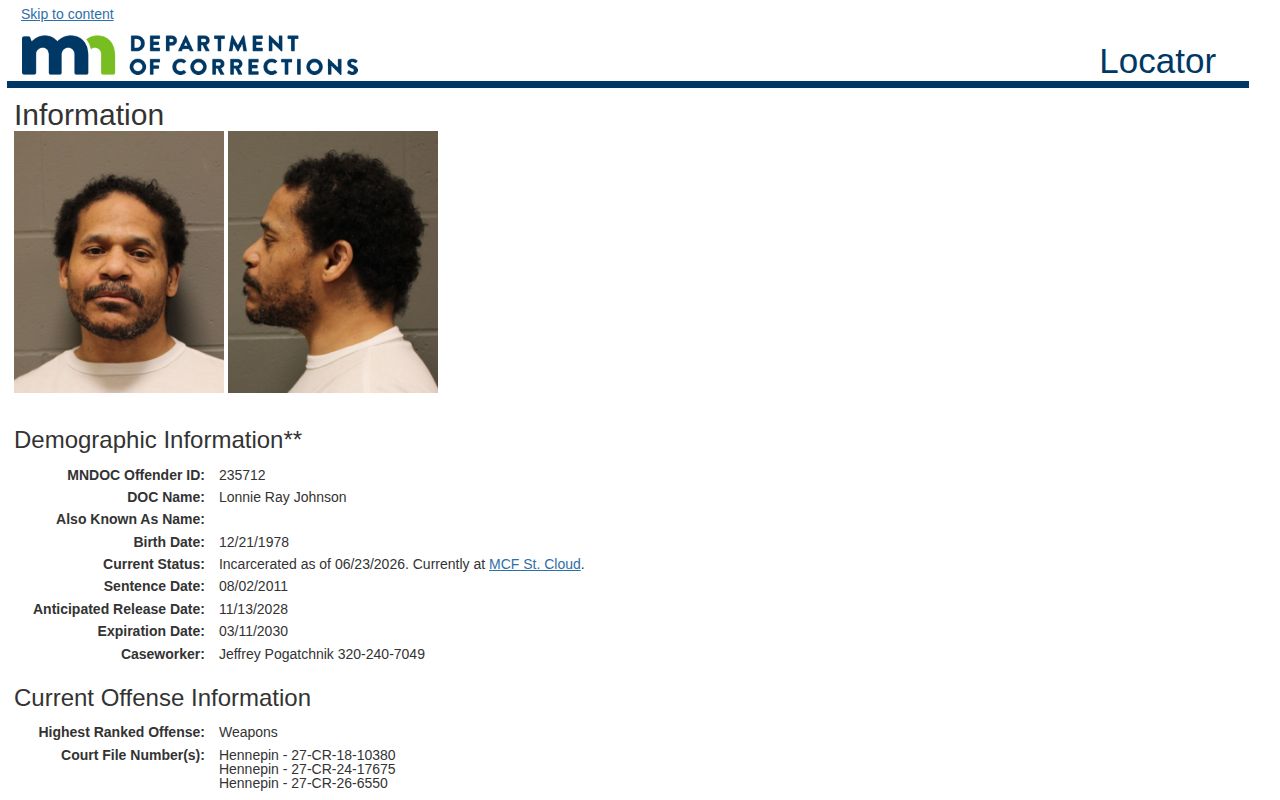
The anticipated-date field is useful after a review, but the label still does not establish that the person has physically departed.
Find Minnesota Parole Decisions
Minnesota does not provide a separate permanent public parole-decision search database on the official pages reviewed for the statewide research. The Board Review Hearings hub is the practical web trail. It carries recent agendas, recordings, and approved minutes. Past meetings remain posted for approximately 90 days, and recordings also appear through MNDOC's YouTube channel. That limited window makes the meeting date important.
Read the approved minutes for the precise action. Minutes can show a grant subject to an approved plan, a denial, a continuance with directives, a violation or revocation outcome, rescission, or final discharge. The decision language and any future effective date matter. A grant does not by itself mean same-day physical release, since plan approval, another sentence, or a consecutive term can still control custody.
- Match the person and meeting date in the current schedule and agenda.
- Open the recording and approved minutes attached to that meeting.
- Identify whether the Board granted, denied, continued, revoked, rescinded, or finally discharged the matter.
- Note any directive, approved-plan condition, future effective date, or other sentence mentioned in the result.
- Check the MNDOC public viewer afterward for current custody or supervision status.
- For an older or formal result, request the maintained Board or DOC record through MNDOC Data Practices.
The official community-status example shows how a later supervision status may appear.
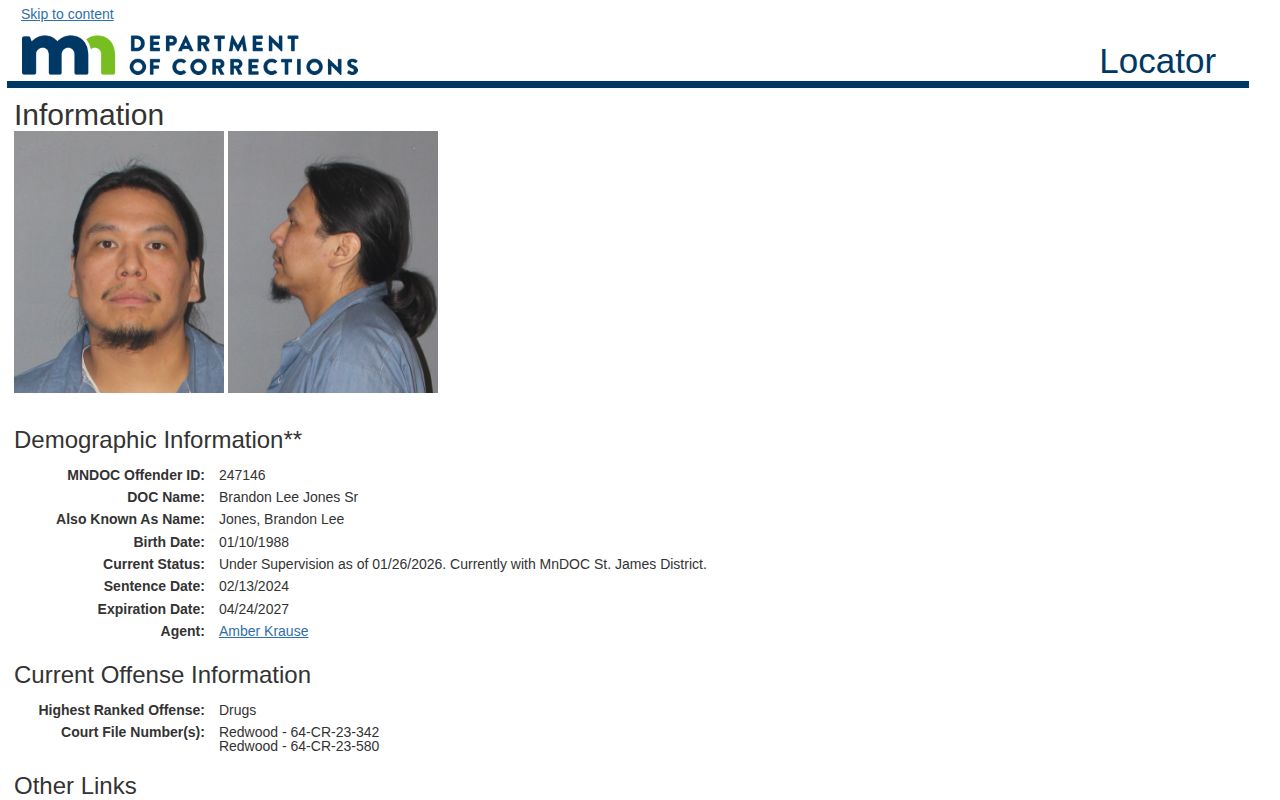
A community status can support post-release verification, but it should not replace the minutes when the question is what the Board decided.
Minnesota Parole Hearing Outcomes
Board results use different procedural terms, and each leads to a different next check. Some outcomes decide release. Others keep the case pending or address conduct after a prior decision. Reading only a headline word can hide a condition or later date in the minutes.
| Outcome | Meaning in the record | Next verification |
|---|---|---|
| Granted | The Board approved release, often subject to a plan or future effective date | Read all conditions, then check current MNDOC status |
| Denied | The Board did not approve release at that review | Read the written basis and governing review cycle |
| Continued | The case remains pending with directives or a later review | Track the next schedule and required steps |
| Rescinded | A prior prerelease grant was withdrawn | Read the stated condition issue and current custody status |
| Revoked | The Board acted on a violation within its authority | Read the violation result and any new custody direction |
| Final discharge | Sentence jurisdiction ended within the Board's caseload | Obtain the maintained discharge record if formal proof is needed |
MNDOC's FY2025 Performance Report recorded 96 reviews and 22 decisions to parole, compared with 84 reviews and 16 decisions in FY2024. Those figures are decision measures, not same-day prison exits. The report itself cautions that decisions do not always produce immediate physical release.
The Minnesota statewide data-request page supplies the general route for seeking maintained government data.
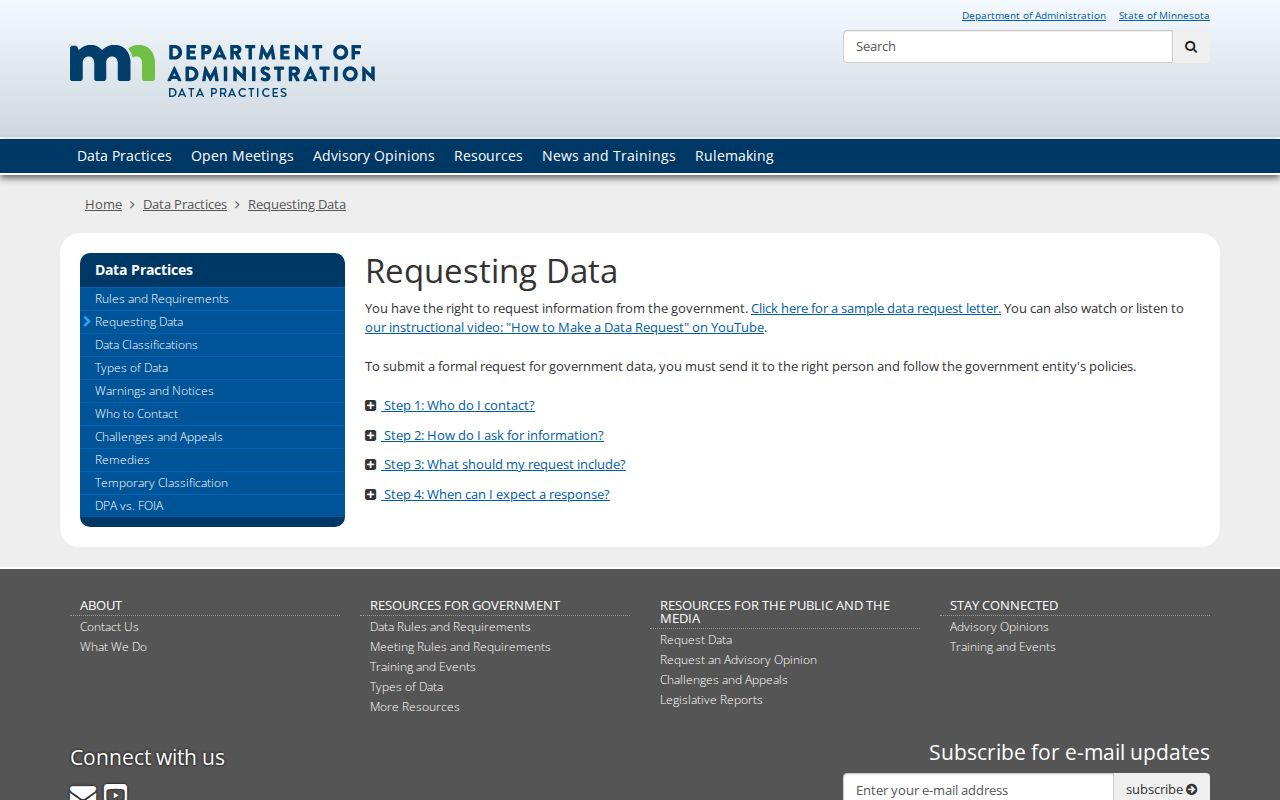
When the recent web window has closed, the state data-request route is the practical way to seek a maintained decision record.
Note: A Board grant is a legal decision point, while the complete MNDOC status answers whether custody or supervision later changed.
Verify Minnesota Release After Review
Use the Board record and custody record together. The schedule establishes the planned review. Approved minutes establish the Board's action. The MNDOC public viewer supplies the later current status for a person still within DOC jurisdiction. An “Under Supervision as of” result indicates the prison portion has ended and community supervision is in effect, unless the complete line also reports custody elsewhere.
A future date in the minutes remains future until the custody record changes. Another sentence, consecutive term, release-plan approval, or non-DOC hold can delay physical departure. Likewise, an Expiration Date is the projected end of sentence jurisdiction, not the prison exit date. The difference between release and later supervision is covered on the Minnesota Parole / Probation page.
For decisions older than the roughly 90-day posting period, submit a focused Chapter 13 request through MNDOC Data Practices. Identify the person, MNDOC number if known, meeting date, and the existing Board decision, minutes, release authorization, or final-discharge record sought. Ask for inspection or copies. Public-data inspection is free under section 13.03, though lawful copy costs and protected classifications may apply.
Keep the response with the date and source. A meeting recording can show what was said, approved minutes summarize the official action, and a maintained decision can supply the formal record requested. If the result mentions a plan, later date, or consecutive term, preserve that qualification. Dropping it can turn a conditional decision into an inaccurate claim of immediate release.
The same caution applies to final discharge. Within SRB jurisdiction, final discharge ends the assigned sentence authority and is not merely a move from prison to community supervision. A parole grant usually begins a later release path. It should not be described as discharge unless the Board record actually uses that outcome.
A complete verification note can be brief but precise. Record the scheduled review date, the meeting date, the approved action, each stated condition, and the later MNDOC status date. If the public materials do not include the needed decision, state that the current web hub did not show it. That is more accurate than treating a missing result as a denial.
Board minutes and custody records may also answer different points in time. Minutes can approve a future action. The public viewer can later show incarceration, work release, supervision, or another complete status phrase. When the viewer reports supervision plus custody at a non-DOC facility, the person should not be described as physically free just because the supervision portion has begun.
County jail records do not substitute for this process unless the issue is a separate local hold or transfer. The SRB decides only the matters assigned by state law. The committing county and facility caseworker may help assemble review material, but the official Board record is the source for the decision. The current custody holder remains the source for physical custody.