
Minnesota Projected Versus Actual Release
MNDOC does not label its field “projected release date.” The official public viewer uses Anticipated Release Date. That date predicts a possible state-prison exit under the calculation reflected in the record when checked. It is prospective. A future date cannot prove that the person later walked out, entered a community program, transferred, or remained confined because something changed.
Actual release is an event. For a state prisoner, a later MNDOC status such as “Under Supervision as of” can establish the agency’s public post-prison posture. A maintained release record from MNDOC provides stronger formal proof. For a county jail, Minnesota Statutes section 13.82 identifies the originating sheriff’s public release and transfer fields, including date, time, legal basis, and any receiving agency. Those local fields separate release from transfer.
A pretrial detainee usually lacks a fixed sentence-based release date. Release may depend on a bond event, court order, case outcome, transfer, or later sentence. A roster’s current custody display should not be turned into a prediction. For a sentenced person, the court order and corrections calculation supply the relevant dates.
Find Minnesota Projected Release Dates
The official route for a state prisoner is the MNDOC Public Viewer. An MNDOC Offender ID is the strongest search key because it separates people who share a name. First name, last name, or both can also be used. The result must be matched with birth date, aliases, offense information, and the court file before its Anticipated Release Date is attributed to someone.
- Open the MNDOC public viewer and select the individual search.
- Enter the MNDOC Offender ID when known, or search by first and last name.
- Match the result with birth date, aliases, offense details, and court-file information.
- Open the profile and locate the exact Anticipated Release Date label.
- Read Current Status and Expiration Date separately; neither field means the same thing.
- Recheck the profile near the date and request the maintained record when formal confirmation is needed.
The official MNDOC search form is shown in the captured view below.
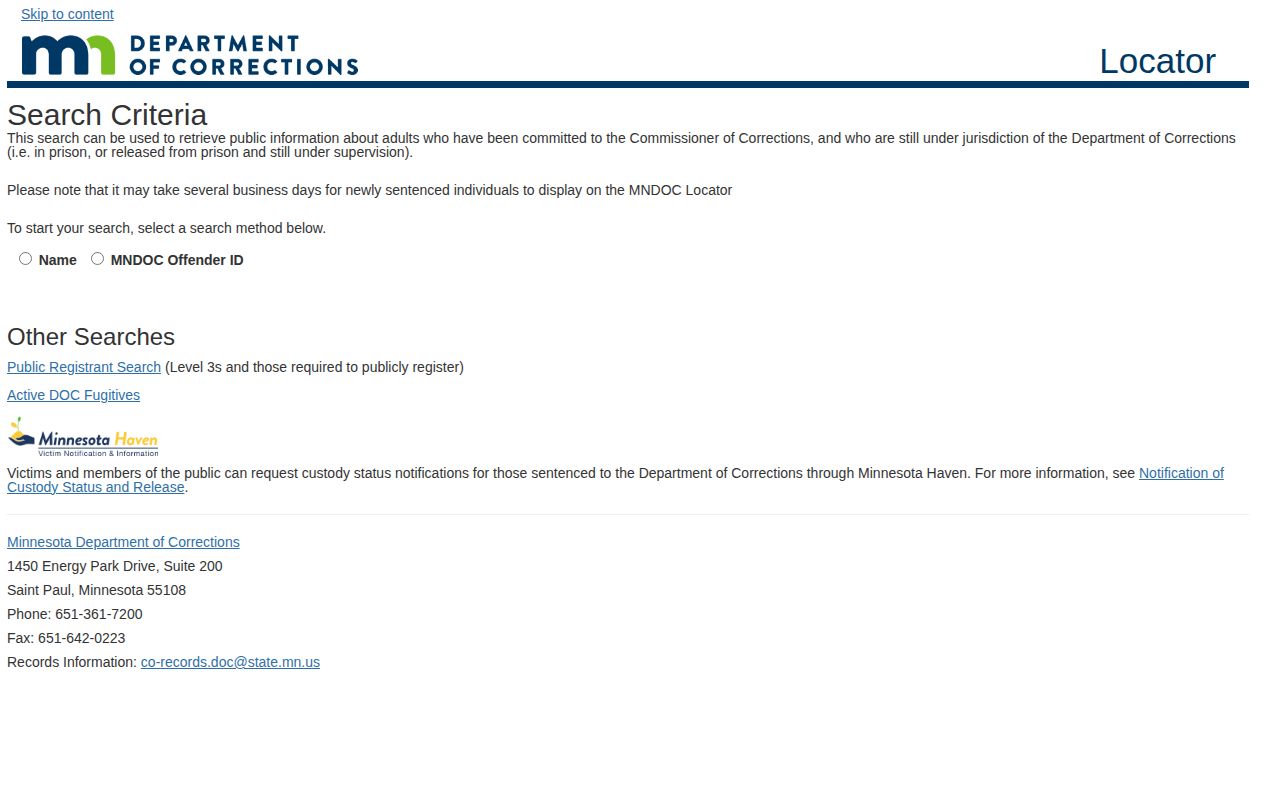
The form starts the lookup. Its results require an identity match and a careful reading of each status and date field.
For deeper search-field and discharge guidance, the MNDOC Offender Search page explains how the viewer treats prison, supervision, and final discharge records.
Minnesota Release Date Fields
An incarcerated MNDOC profile can show Sentence Date, Anticipated Release Date, and Expiration Date. These labels describe different points in the sentence. Sentence Date anchors the listed sentence information. Anticipated Release Date is the agency’s current estimate for leaving prison. Expiration Date concerns the projected end of the sentence or MNDOC jurisdiction, which can occur after release into the community.
| Field or status | Meaning for release timing |
|---|---|
| Sentence Date | The sentence date shown in the MNDOC profile; it is not a release date. |
| Anticipated Release Date | The present prospective date for a prison exit when applicable. |
| Current Status | The current prison, program, supervision, or other corrections posture. |
| Under Supervision as of | A public post-prison status effective as of the displayed date, not final discharge. |
| Expiration Date | The projected end of sentence or DOC jurisdiction, not the day prison custody ended. |
The official incarcerated-result example displays Anticipated Release Date and Expiration Date together.
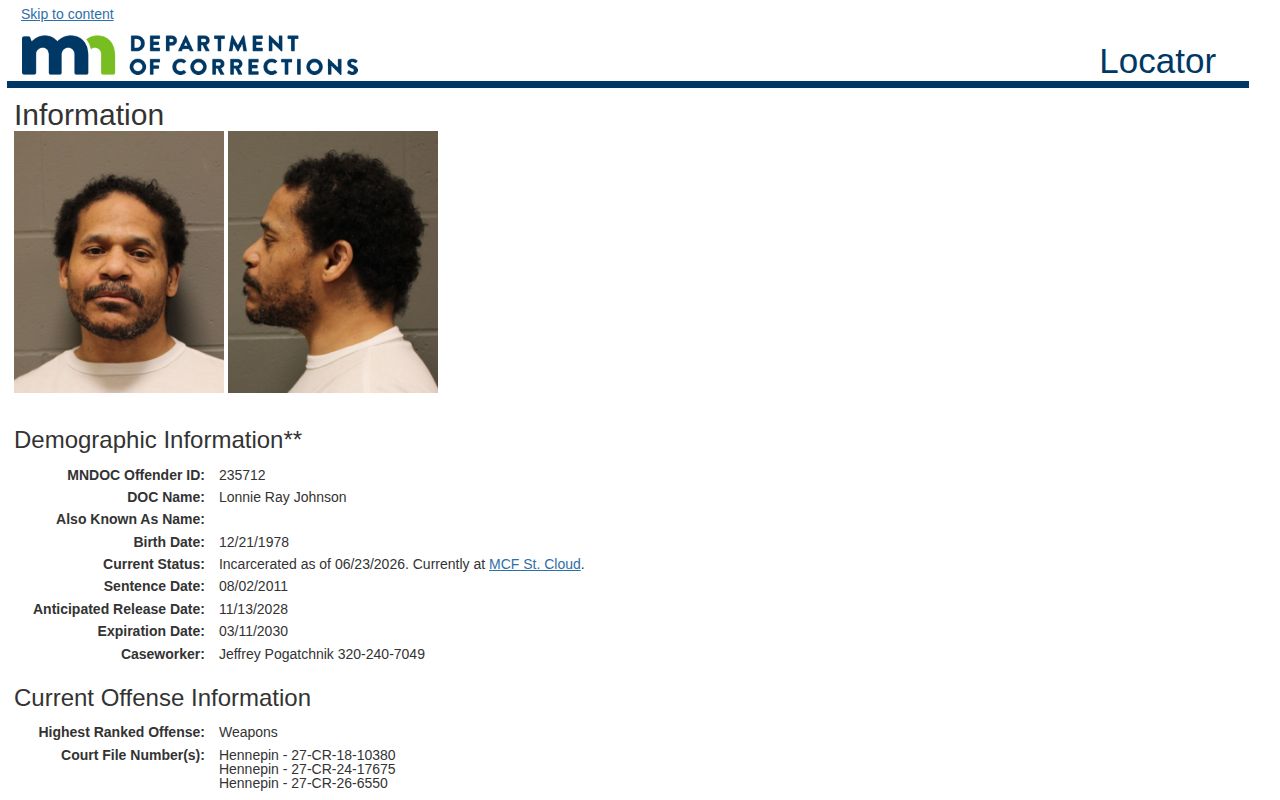
Seeing both fields on one result makes clear why the projected prison exit and final expiration cannot be treated as one date.
Note: Use Minnesota’s exact “Anticipated Release Date” label when recording a result, since “projected” is only common search language.
Minnesota Sentence Release Baseline
Minnesota should not be described with a generic rule that every prisoner serves 85 percent. For qualifying felony crimes committed on or after August 1, 1993, Minnesota Statutes section 244.01 defines the term of imprisonment as two-thirds of the fixed executed sentence. Section 244.05 provides a supervised-release term equal to one-third, subject to discipline and other statutory rules.
This baseline divides the executed sentence between imprisonment and supervised release. It does not create a reliable calendar date by simple arithmetic. Jail credit may change the starting calculation. Concurrent or consecutive sentences affect aggregation. An amended warrant of commitment, resentencing, conditional-release term, another sentence, court order, or disciplinary confinement can also alter the published date or legal posture.
The official Anticipated Release Date should be used as MNDOC’s current published estimate. For the agency’s maintained calculation, request the existing sentence or release-date record from Central Records. That avoids guessing how multiple rules apply to one case.
Minnesota Legacy Good Time
“Good time” has a specific legacy meaning in Minnesota. Section 244.04 applies to covered crimes committed before August 1, 1993. Under that law, the term is reduced by one day for each two days during which the person observes disciplinary rules. The reduction accrues toward supervised release.
Legacy good time is not the same as modern earned incentive release credit. Minnesota Rehabilitation and Reinvestment Act provisions exclude people subject to the legacy good-time law or a similar law. The systems should not be stacked into one informal estimate. Offense date and legal eligibility must be established before choosing which credit rule applies.
- Good time
- The legacy discipline-based credit for covered pre-August 1993 crimes.
- Supervised release
- The community portion of the sentence after the imprisonment term.
- Conditional release
- An added release term that can apply under a specialized statute.
- Jail credit
- Qualifying time credited in the sentence calculation under the governing record or order.
These terms change the meaning of a date. None should be assumed from the length of the sentence alone.
Minnesota Has Two Release Clocks
Minnesota has two distinct clocks and two distinct credit concepts. The prison clock asks when the person may leave confinement. For an ordinary covered post-1993 sentence, the two-thirds imprisonment and one-third supervised-release structure supplies the baseline. Earned incentive release credit under the Minnesota Rehabilitation and Reinvestment Act can reduce the prison portion when its rules are met, without enlarging the supervised-release term.
The supervision clock begins after the prison phase. Separate earned compliance credit can reduce active supervision. Section 244.41 defines one month of active-supervision reduction for each two compliant months under the policy, and section 244.46 governs mechanics and exclusions. Supervision abatement can end active reporting without changing the legal Expiration Date. It is not early final discharge.
| Credit concept | Which clock it affects | What it does not mean |
|---|---|---|
| Legacy good time | Covered older imprisonment terms | It does not combine automatically with MRRA credit. |
| Earned incentive release credit | The imprisonment term under MRRA rules | It does not enlarge the supervised-release term. |
| Earned compliance credit | Active community supervision | It does not change the legal Expiration Date by itself. |
| Supervision abatement | Active reporting posture | It is not final discharge from the sentence. |
The official MNDOC under-supervision presentation illustrates the post-prison status.
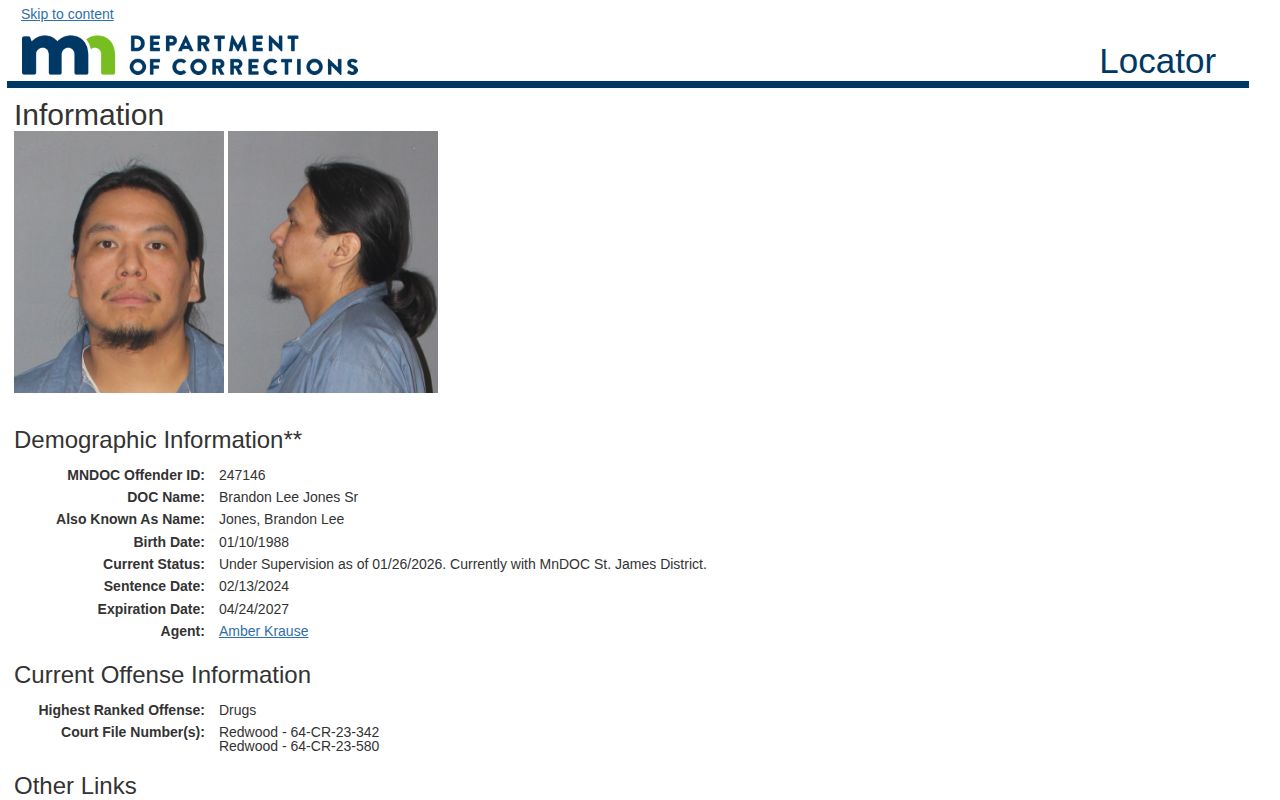
The status display shows why a prison release date and the later end of DOC jurisdiction belong on separate clocks.
Minnesota Earned Incentive Release Credit
The Minnesota Rehabilitation and Reinvestment Act creates earned incentive release credit tied to goals in an individualized rehabilitation plan. Section 244.41 defines the credit, section 244.43 requires MNDOC policy for awards and programming, and section 244.44 governs calculation and revocation. Eligibility and actual awards matter. Credit is not automatic.
Under section 244.44, earned credit is included when MNDOC calculates the imprisonment term. The maximum credit that may be subtracted is 17 percent of the total executed sentence. Credit cannot reduce imprisonment below one-half of that executed sentence. The supervised-release term is not shortened by the prison-side credit.
Those limits do not support claims that every person serves 50 percent, every person receives 17 percent, or Minnesota now has an “83 percent rule.” Individual objectives must be completed, an award must be made, and credit can be revoked. The Anticipated Release Date reflects the agency’s present computation more reliably than a private calculation based on the maximum possible credit.
What Changes Minnesota Release Dates
An anticipated date can move when MNDOC receives new information or applies a governing rule. Some changes reward completed objectives. Others extend confinement or correct the sentence record. A new date still remains prospective until the release event occurs.
| Factor | Possible effect on Anticipated Release Date |
|---|---|
| Earned credit award | May reduce the imprisonment term within MRRA eligibility and statutory limits. |
| Earned credit revocation | May remove credit already reflected in the calculation. |
| Disciplinary confinement | Can delay supervised release in circumstances authorized by section 244.05. |
| Corrected jail credit | Can alter the time credited toward the sentence. |
| Amended sentence or resentencing | Can change the controlling term and require recalculation. |
| Concurrent or consecutive terms | Can change how multiple sentences are aggregated. |
| Another sentence or court order | Can change custody or the legal authority governing release. |
Some Supervised Release Board cases can also involve a projected date or continued review, but that board has a limited statutory caseload. A readiness assessment, eligibility date, projected date, grant, and actual departure are separate events. Ordinary determinate supervised release is not a board vote in every case.
Note: Recheck the MNDOC profile after a court or discipline event because the published estimate may change when records update.
Minnesota County Release Dates Differ
The MNDOC Anticipated Release Date does not calculate an ordinary county-jail stay. Minnesota’s 87 counties use varied roster systems. Some display current custody only, while others publish different local fields. A pretrial detainee may have no sentence-based date. A person serving a local sentence must be checked through the sentencing order, applicable jail credit, and the holding sheriff’s release or transfer record.
Do not import the state-prison two-thirds rule into every county jail booking. Minnesota Statutes section 13.82, subdivision 2 makes specified release and transfer facts public at the originating law-enforcement agency. It separates the date, time, and legal basis for release from the date, time, legal basis, and receiving agency for a transfer. That difference answers whether local custody ended in the community or continued elsewhere.
A court order can establish the legal authority for release. It does not by itself prove the exact time that the sheriff completed the physical release. Pair court data with the sheriff’s statutory release field. If the person moved into MNDOC custody, use the state viewer only after recognizing that the local roster exit was a transfer.
Confirm Minnesota Actual Release
Near an anticipated date, check Current Status again. “Under Supervision as of” indicates MNDOC’s public post-prison posture, while Expiration Date still marks the projected end of sentence or jurisdiction. A work-release assignment is a program or custody status, not final discharge. If the person later disappears after jurisdiction expires, request the maintained release or discharge data rather than calling the missing result proof.
The MNDOC Data Practices route accepts requests for existing government data. A useful request names the person, includes the MNDOC ID and approximate sentence period if known, and asks for the maintained Anticipated Release Date calculation, actual release date, release status or type, supervision dates, and expiration or final discharge record. Public-data inspection is free under section 13.03, while lawful copy costs may apply.
The statewide Minnesota data-request resource provides the general request framework captured here.
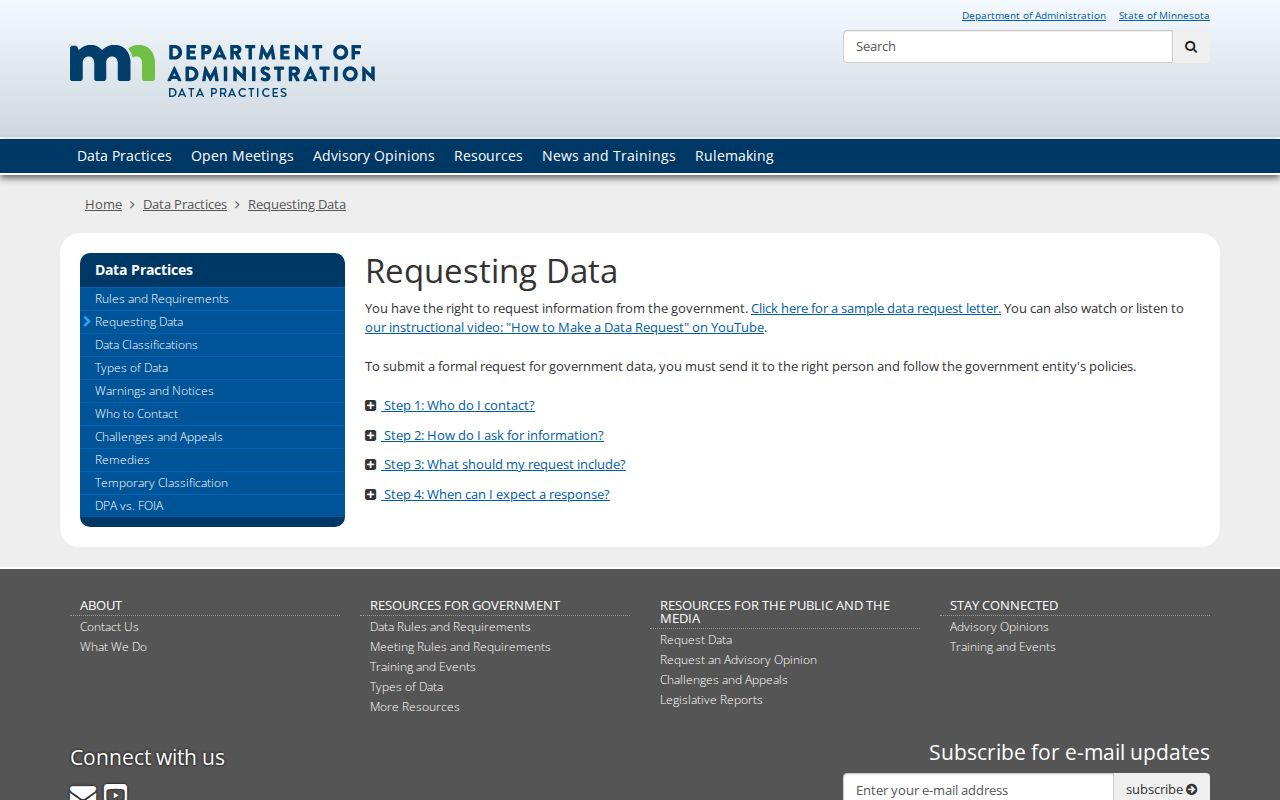
A request should identify existing fields and records, since an agency need not create a new calculation or narrative that it does not maintain.
Notification tools are custody-specific. Minnesota VINE serves county jails, not MNDOC prisons. MNDOC prison notifications use Minnesota Haven and Victim Assistance. The VINELink Release Check explains that boundary. An alert can prompt a new official check, but it is not a certified release record.